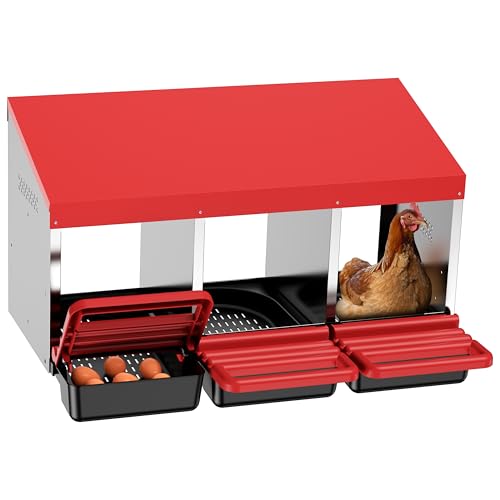
You have four beautiful nesting boxes.
They're clean, comfortable, and thoughtfully arranged.
Your chickens use one.
All of them.
Often simultaneously.
Why one box becomes popular
Hens may be attracted to particular nesting locations because they feel secure, private, or familiar.
A box that's a little darker, a little quieter, or in a slightly more sheltered corner may seem like the obvious choice. Chickens prefer a nest that feels hidden and protected, and what looks identical to you may feel very different to a hen. Differences in light, draft, height, and even smell can all matter.
Seeing another bird use a nest can also make that location attractive. Hens tend to copy each other, and a nest that already has an egg in it often looks like a good idea to the next hen. This is why some keepers place a wooden or ceramic dummy egg in each box. It signals that the spot is approved.
A commonly recommended starting point is roughly one nest for every four or five laying hens, although actual needs vary with flock size and management. Guidelines from poultry organizations and Extension services can help you work out what's right for your birds.
Providing numerous boxes doesn't guarantee equal use.
Chickens, regrettably, have not read the equipment catalog.
The traffic jam
On a busy laying morning, you may see a queue.
One hen is on the nest. Another stands at the entrance, shifting from foot to foot, making low, impatient noises. A third perches on the edge, peering in. Occasionally two hens will squeeze in together, resulting in a scuffle, a flurry of feathers, and a cracked egg.
It's funny to watch, in a slightly exasperating way. And it's usually temporary, since each hen needs only about half an hour to lay.
Still, if the pattern repeats every morning, it's worth looking at why.
When competition becomes a problem
Crowding can lead to cracked eggs, nest disputes, and increased stress.
Broken eggs can also lead to a nasty habit. A hen who tastes egg may develop a liking for it, and egg eating can spread through a flock. Collecting eggs promptly and keeping nests well bedded can help prevent it.
Dirty, crowded nests also mean dirtier eggs, which affects hygiene and shelf life. If you eat your eggs, a cleaner nesting area is better for you as well as the hens.
Watch for birds bullying others away from nests. A lower-ranking hen who's repeatedly prevented from laying may hold her egg, search for a hidden spot elsewhere, or become stressed. If you suspect it's happening, add another box or two, or place a screen between boxes to reduce disputes.
Straining, crouching for long periods without laying, or repeated unproductive visits to the nest deserve a closer look. A hen who is struggling to pass an egg needs prompt veterinary advice.
Making the boxes more appealing
Keep boxes clean, shaded, quiet, and comfortably bedded. Fresh straw, shavings, or another suitable bedding material provides a soft, dry place for eggs. Replace soiled bedding regularly.
Place them in suitable locations and ensure they're easy for hens to enter. A box that's too high, too exposed, or hard to reach may be ignored. Nests are usually best placed lower than the roosts, so hens don't sleep in them. If birds roost in the boxes overnight, they'll foul them quickly.
A little privacy helps. Some keepers hang a small curtain across the front of each box, or build them with solid sides, so hens feel hidden. A darker interior tends to be more attractive than a bright one.
Collect eggs regularly and watch for birds bullying others away from nests. Frequent collection keeps eggs clean, reduces breakage, and discourages broodiness.
If one particular box is causing constant trouble, consider adjusting placement, privacy, or access. Sometimes blocking the favorite box for a few days and reopening it later can help the birds spread out. Other times, making the unpopular boxes look more like the favorite is the easier fix.
Accepting a certain level of chaos
Some hens may continue preferring the same spot regardless.
You can rearrange, redecorate, and reorganize, and the hen will march right past the new boxes and settle into the old one with a look of satisfaction. If everyone gets an egg laid and nobody's injured, there's probably no real problem. A few hens sharing a box is not an emergency.
Treat it as an experiment. Change one thing at a time, wait a week, and see what happens. You'll learn a lot about your flock.
Nesting box basics worth getting right
If you're building or buying boxes, a few details can save a lot of trouble.
Size. A box roughly a foot square is a common suggestion for standard-sized hens, though larger breeds may need more room and bantams less. The box should be big enough for a hen to turn around and settle comfortably, but not so large that several birds can squeeze in together.
Height. Place boxes lower than the roosts. Hens like to sleep at the highest point available, and boxes that sit above the roost become bedrooms.
Material. Wood, plastic, and metal boxes all work. Whatever you choose, make sure there are no sharp edges, splinters, or gaps where a hen could catch a leg or toe. Wood can harbor mites if it isn't maintained, and plastic is easier to wipe clean.
Bedding. Pine shavings, straw, and similar materials are widely used. Avoid anything dusty or damp, and replace soiled bedding promptly.
Access. A small perch or ledge in front of each box helps hens hop in and out without trampling the eggs.
Darkness. A slightly dim box is more attractive than a bright one. If the coop is brightly lit, consider hanging a curtain or adding a roof or side panel.
Finally, make sure the boxes are easy for you to reach. Collecting eggs from a box that requires contortion is a chore you'll soon start avoiding, and eggs left too long are more likely to be broken or dirty.
One more idea
If you have a particularly stubborn nesting problem, try a small experiment. Put a different type of bedding in the unpopular boxes, add a curtain, or move a box to a darker corner. Change one thing at a time and watch what happens over a week or two. Your hens will let you know, in their own way, which arrangement they prefer. It's a bit like interior design, with a very opinionated client.
A lesson about control
There is a comforting lesson here about the limits of human control.
You can build a lovely nesting area.
You can thoughtfully arrange every detail.
But ultimately, a chicken may decide that the only suitable place to lay an egg is the box currently occupied by three other chickens.
And she will make her displeasure known.
Loudly.